Buddhism and Empires
c. 300 BCE to 625 CE
Kashmir became a major centre of Buddhist learning, linked to the Mauryan and Kushan empires and to the trade routes of Central Asia. Monasteries and terracotta-tiled courtyards at sites like Harwan date from these centuries. In the 6th century the Valley came under the Huns, remembered through the ruler Mihirakula.
3 events · 4 exhibits
Events
c. 3rd century BCE
Ashoka and the city of Srinagari
TraditionKalhana's chronicle says the Mauryan emperor Ashoka ruled Kashmir and founded a city called Srinagari, usually placed near Pandrethan on the edge of modern Srinagar.
In the museumPandrethan Temple
c. 1st to 2nd century CE
The Fourth Buddhist Council
TraditionBuddhist tradition holds that a great council of monks met in Kashmir under the Kushan king Kanishka and compiled commentaries on Buddhist teaching.
early 6th century
Mihirakula and the Huns
The Alchon Hun ruler Mihirakula held Kashmir in the early 6th century. Kalhana remembers him as one of the cruellest kings in the Valley's history.
In this wing
- Text placard
The Nilamata Purana
Traditionc. 6th to 8th century CE
The oldest text about Kashmir's origins, rituals and sacred places.
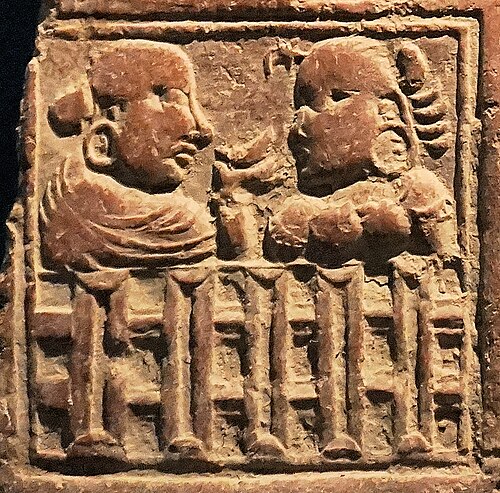
Harwan
c. 3rd to 5th century CE
A Buddhist site known for its moulded terracotta tiles.
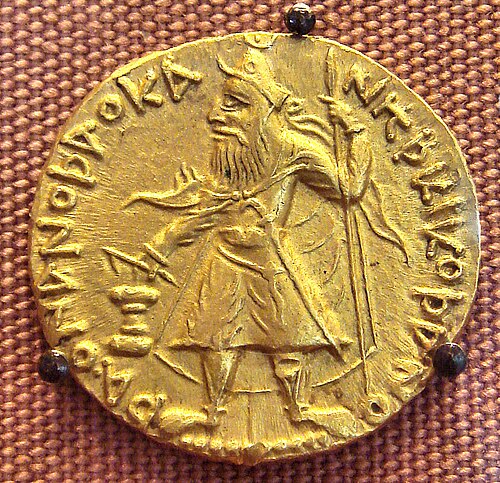
Kanishka
2nd century CE
The Kushan emperor linked by tradition to Buddhism in Kashmir.
- Text placard
The Gilgit Manuscripts
c. 5th to 7th century CE
Some of the oldest surviving manuscripts in South Asia.
Further reading for this period
Books that cover this period. They are places to read further, not sources for any single sentence on this page.
- Kalhana's Rajatarangini: A Chronicle of the Kings of KashmirM. A. Stein (translator), 1900
- The Nilamata PuranaVed Kumari (editor and translator), 1968