The Shah Mir Sultanate
1339 to 1561
Shah Mir founded a sultanate that lasted over two centuries. Islam spread through the Valley, carried by Sufi teachers from Central Asia and Persia and by Kashmir's own Rishi order. Sultan Zain-ul-Abidin, remembered as Budshah, the great king, is celebrated for religious tolerance and for encouraging crafts, learning and public works.
8 events · 10 exhibits
Events
1339
Shah Mir founds the Sultanate
Shah Mir, a courtier who had served the last Hindu rulers, took the throne and founded a dynasty that ruled Kashmir for more than 200 years.
In the museumShah Mir
14th century
Lal Ded's verses
TraditionThe mystic Lal Ded, also called Lalleshwari or Lalla Arifa, composed short spiritual verses called vakhs in Kashmiri. They are among the oldest works in the language and are still recited by Hindus and Muslims alike.
In the museumLal Ded
1370s and 1380s
Mir Sayyid Ali Hamadani comes to Kashmir
ContestedThe Persian Sufi scholar Mir Sayyid Ali Hamadani visited Kashmir with a large group of followers. He is remembered as a central figure in the spread of Islam in the Valley, and tradition credits his companions with bringing crafts such as shawl weaving.
In the museumMir Sayyid Ali HamadaniKhanqah-e-Moula
1377 to 1438
Nund Rishi and the Rishi order
Sheikh Nooruddin Noorani, known as Nund Rishi or Sheikh ul-Alam, founded the Rishi order, a Kashmiri Sufi tradition of simple living and devotion. His Kashmiri verses, called shruks, sit alongside Lal Ded's at the root of Kashmiri literature.
In the museumNund RishiCharar-e-Sharief
1389 to 1413
Sultan Sikandar's reign
ContestedSultan Sikandar built Srinagar's Jamia Masjid. The chronicler Jonaraja also records the destruction of many temples and pressure on Brahmins during his reign.
In the museumJamia Masjid, Srinagar
1394 to 1402
Srinagar's Jamia Masjid is built
Sultan Sikandar began the Jamia Masjid in 1394 and it was finished in 1402. Burned and rebuilt several times, it remains the Valley's principal mosque.
In the museumJamia Masjid, Srinagar
1420 to 1470
Budshah, the great king
Sultan Zain-ul-Abidin invited back Pandits who had fled, ended the jizya tax on non-Muslims, supported translation between Sanskrit and Persian, and encouraged crafts, canals and bridges. Kashmiris still call him Budshah, the great king.
In the museumZain-ul-Abidin (Budshah)Tomb of Budshah's MotherZaina Lank
15th century
The chronicle continues
Jonaraja extended Kalhana's Rajatarangini into his own time, and after his death in 1459 his pupil Shrivara carried it further. Together they are the main contemporary record of the early Sultanate.
In the museumThe Rajatarangini
In this wing
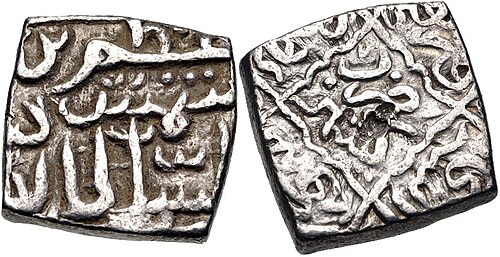
Shah Mir
Ruled from 1339
Founder of Kashmir's first long-lasting Muslim dynasty.
- Text placard
Lal Ded
Tradition14th century
The mystic poet revered by Hindus and Muslims.
- Text placard
Mir Sayyid Ali Hamadani
1314 to 1384
The Sufi scholar known in Kashmir as Shah-e-Hamadan.
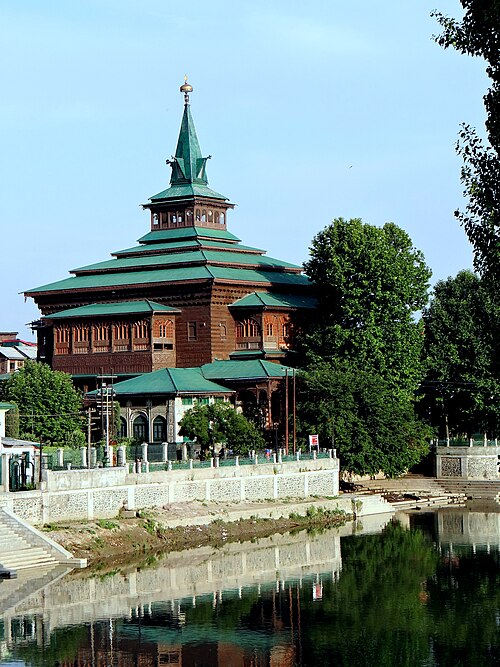
Khanqah-e-Moula
First built 1395
A wooden mosque and shrine honouring Shah-e-Hamadan.
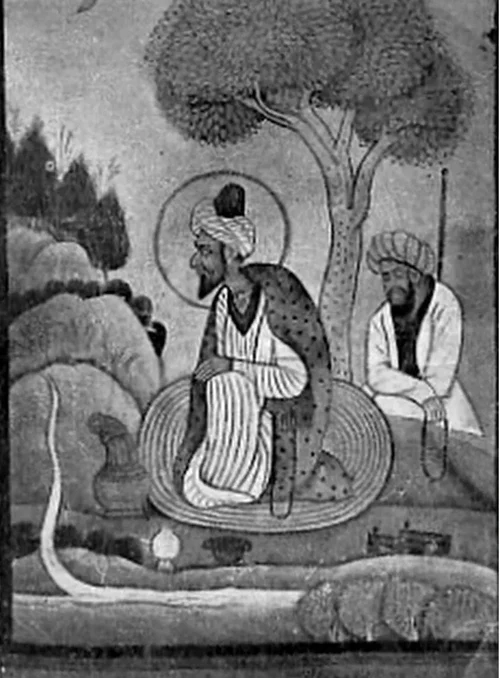
Nund Rishi
1377 to 1438
Sheikh ul-Alam, founder of the Rishi order.
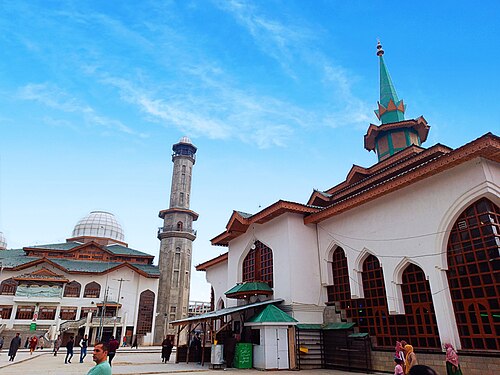
Charar-e-Sharief
Shrine of the 15th century, rebuilt after 1995
The shrine of Nund Rishi.
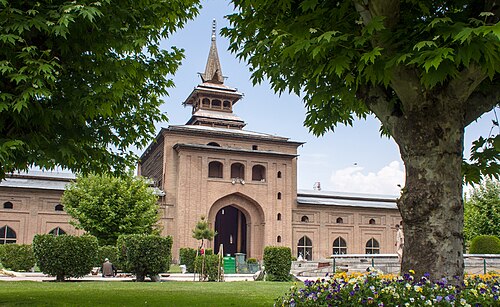
Jamia Masjid, Srinagar
1394 to 1402, rebuilt later
The Valley's great congregational mosque.
- Text placard
Zain-ul-Abidin (Budshah)
Reigned 1420 to 1470
The sultan Kashmiris call the great king.
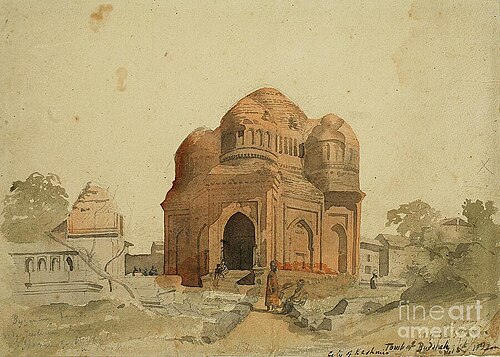
Tomb of Budshah's Mother
15th century
A domed brick tomb in a royal graveyard.

Zaina Lank
15th century
An island built by hand in the middle of Wular Lake.
Further reading for this period
Books that cover this period. They are places to read further, not sources for any single sentence on this page.
- Kashmir Under the SultansMohibbul Hasan, 1959
- Kings of Kashmira (translations of Jonaraja and Shrivara)Jogesh Chunder Dutt (translator), 1898